ActivewearDiva looked like a business.
It had a polished Shopify theme, a broad catalogue and the visual language of a modern fitness brand. I had bought it through Flippa for around €250, and because the store already looked finished, I assumed the distance between acquisition and sales would be relatively small.
This was one of my first ecommerce projects.
I changed the things I could see.
Colours. Images. Collections. Layout details.
The website became more mine.
The business did not become more viable.
ActivewearDiva operated inside a large market, but it did not yet have a clearly defined market of its own. The products were broad, familiar and available from countless other stores. I had bought a good-looking storefront without first establishing why a specific customer would choose it.
After a period without sales, the promises around me started to become more attractive.
Shopify recommended apps, improvements and marketing tools. Advertisements appeared on Meta offering guidance, systems and faster growth. Every message seemed to suggest that the store was close to working, but that I still lacked one missing ingredient.
One Dutch ecommerce coaching company offered a product called the “Webshop Doubler” for €1.
The name now feels unintentionally accurate.
Twice zero revenue is still zero.
That €1 purchase eventually led to a coaching offer of €6,000—excluding the money I would still need to spend on advertising.
A beautiful Shopify store is not a business
A polished storefront can create a dangerous illusion.
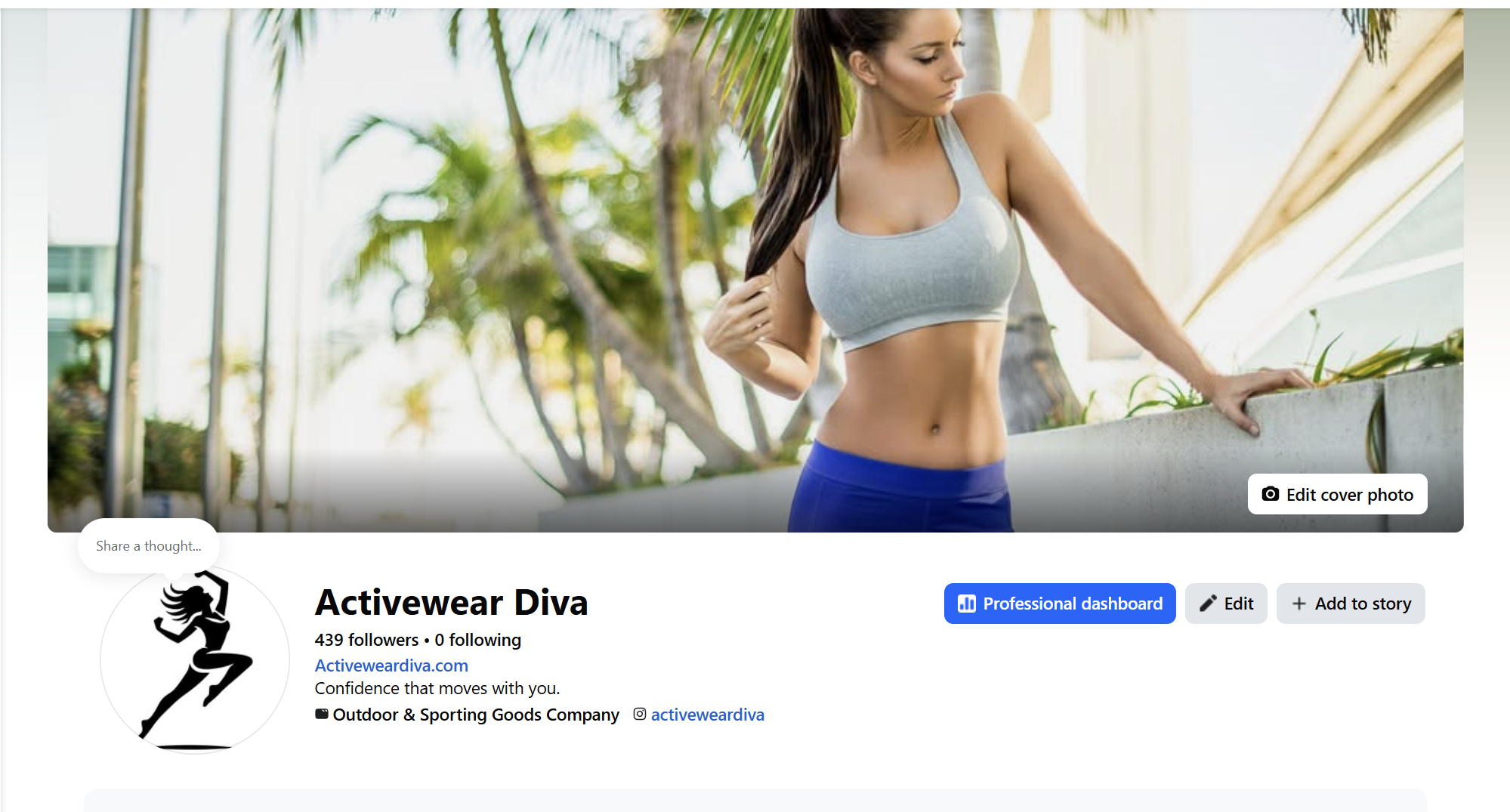
It looks complete.
The navigation works. The product cards are aligned. The theme feels modern. Shopify provides dashboards, reports, recommended apps and marketing features. Everything around the store suggests that it belongs inside a functioning commercial system.
That appearance made it easy for me to believe that the hard part had already been done.
The store existed.
The products existed.
The brand looked respectable.
Therefore, the missing piece had to be traffic.
That conclusion was premature.
Traffic can bring more people to a weak offer. It cannot automatically create a reason to buy.
ActivewearDiva still lacked several basic answers:
- Who was the store really for?
- Which customer problem did it solve?
- Why would someone buy these products here rather than from a known sports brand, a marketplace or another Shopify store?
- Which product could carry the first sale?
- Were the margins strong enough to support advertising?
- Was there any evidence that the market wanted this specific offer?
I had focused on visual changes because those were the changes I could understand and control.
The commercial questions were harder.
So I postponed them.
Shopify can make every store feel one app away from growth
Shopify is a powerful platform.
It also surrounds a new store owner with a constant stream of suggestions.
Install this app.
Improve this page.
Add this sales tool.
Start this campaign.
Recover abandoned carts.
Increase conversion.
Optimise performance.
Each recommendation may be useful in the right situation. Together, they can create the impression that revenue is mainly a matter of completing enough recommended steps.
When a store has no sales, that impression becomes especially persuasive.
You start looking for the missing setting.
The missing app.
The missing strategy.
The missing expert.
And after enough time without orders, advertisements that promise a direct answer begin to feel less like marketing and more like relief.
That is where the €1 guide entered the story.
The €1 guide was the beginning, not the solution
I bought “De Webshop Verdubbelaar”—the Webshop Doubler—for €1 plus VAT.
The total invoice was €1.21.
At that price, the decision felt almost risk-free. I was not committing to a major programme. I was buying a small guide that might help me understand why the store was not selling.
I no longer have the guide itself, so I will not reconstruct its exact contents.
What I do still have is the sequence that followed.
The low-cost purchase led to personal contact.
That led to a conversation.
The conversation led to a much larger offer.
This is a common sales route: offer something inexpensive, identify people with a specific problem and then present a higher-priced service.
There is nothing automatically wrong with that model.
The real question is whether the expensive service fits the business being advised.
In my case, the store had generated no revenue.
The business model was unproven.
The target market was still vague.
The products were not distinctive.
Yet the proposed answer was not to slow down and test the fundamentals first.
It was a premium coaching programme costing €6,000.
Advertising costs were not included.
The €250 store and the €6,000 solution
The contrast should have stopped me immediately.
I had paid around €250 for the webshop.
It had produced €0 in revenue.
I was being asked to consider €6,000 in coaching before adding an advertising budget on top.
That is not automatically irrational.
A low purchase price does not determine the real potential of a business. A cheap acquisition can still justify serious investment when there is evidence of demand, healthy margins, a strong product or a clear competitive advantage.
ActivewearDiva had not shown that evidence.
At that stage, the proposed investment was not scaling a proven store.
It was funding the attempt to discover whether the store could work at all.
Those are very different decisions.
A business with validated demand may hire an agency to grow faster.
A business with zero revenue may first need to determine whether there is anything worth growing.
The language made the plan sound more controlled
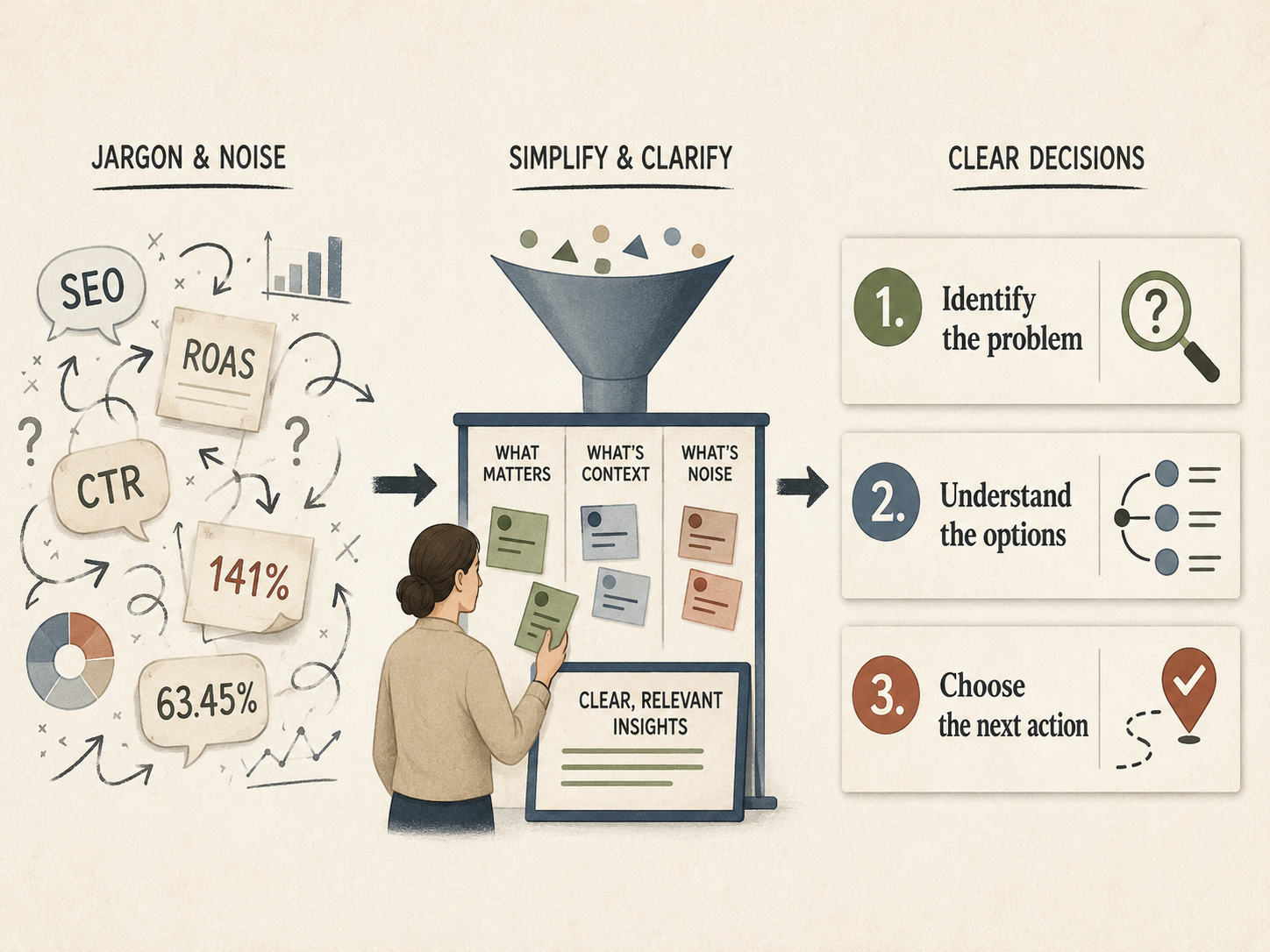
The conversation included terms such as ROAS, CTR, conversion optimisation, advertising strategy and scaling.
Those are real terms.
They describe useful measurements and activities.
But specialist language can make a speculative plan sound more controlled than it really is.
As explained in Clear Language Is Part of the Service, technical language should help an owner understand a decision—not make the recommendation harder to question.
The plain-language version of the proposal was closer to this:
Spend €6,000 on guidance. Spend more money on advertising. Then the store will probably become profitable.
The word “probably” carried most of the risk.
The coaching company would receive its fee.
Meta would receive the advertising budget.
Shopify and the apps would continue receiving their subscriptions.
I would carry the risk that the products, margins, positioning and customer demand were not strong enough.
Zero revenue was not treated as a reason to slow down
This is the part that matters most to me now.
My lack of revenue did not make the proposed investment smaller.
It was used as an argument for why I needed more help.
The reasoning sounded plausible:
- the store was still in an early phase;
- early investment in marketing could accelerate growth;
- learning the right methods now could save money later;
- professional guidance could prevent beginner mistakes.
All of those statements can be true.
But they do not answer the economic question.
Did this particular store justify a €6,000 coaching programme plus advertising costs?
At the time, there was no evidence that it did.
A beginner with a weakly defined store does not necessarily need a larger commitment.
Sometimes the correct next step is a smaller experiment.
One product.
One audience.
One clear reason to buy.
One realistic margin calculation.
One limited test.
Without that foundation, expensive coaching can become a very costly way to learn that the original offer was not strong enough.
The lower offers did not solve the underlying problem
I declined because the investment was too large.
After that, I received another message.
The argument was that investing in good marketing during the early stage could help me grow faster and eventually save costs.
Because the company believed in my potential and understood my situation, the offer was reduced from €6,000 to €3,600. The guidance would take place every two weeks instead of every week.
Later, there was also a summer promotion that brought the apparent price down again, to around €3,000.
A lower price can make a service more affordable.
It does not automatically make it appropriate.
The store still had no sales.
The products were still unvalidated.
The audience was still unclear.
The advertising model was still unproven.
Reducing the price changed the cost.
It did not change the underlying business case.
Eventually, I blocked the number.
Not because every ecommerce agency is useless.
Not because coaching can never justify a substantial price.
I blocked it because the conversation was no longer helping me decide whether the investment made sense. It kept finding new ways to reopen a sale I had already declined.
Agencies can be useful—and still be wrong for you
This article is not an argument against agencies.
Good agencies can provide valuable skills, structure, accountability and experience. They can help a business avoid expensive mistakes. They can improve advertising, positioning, customer journeys, content and measurement.
But a useful service can still be the wrong purchase at the wrong time.
A €6,000 programme may be reasonable for a store that already has:
- a defined customer;
- proven products;
- known margins;
- repeatable sales;
- enough capital to test properly;
- a clear reason to scale.
It is a very different proposition for a beginner who has just bought a €250 webshop and generated no revenue.
The service provider may see a promising project.
The owner still has to ask whether the business can economically support the proposed work.
Those are not the same question.
What should have been tested first
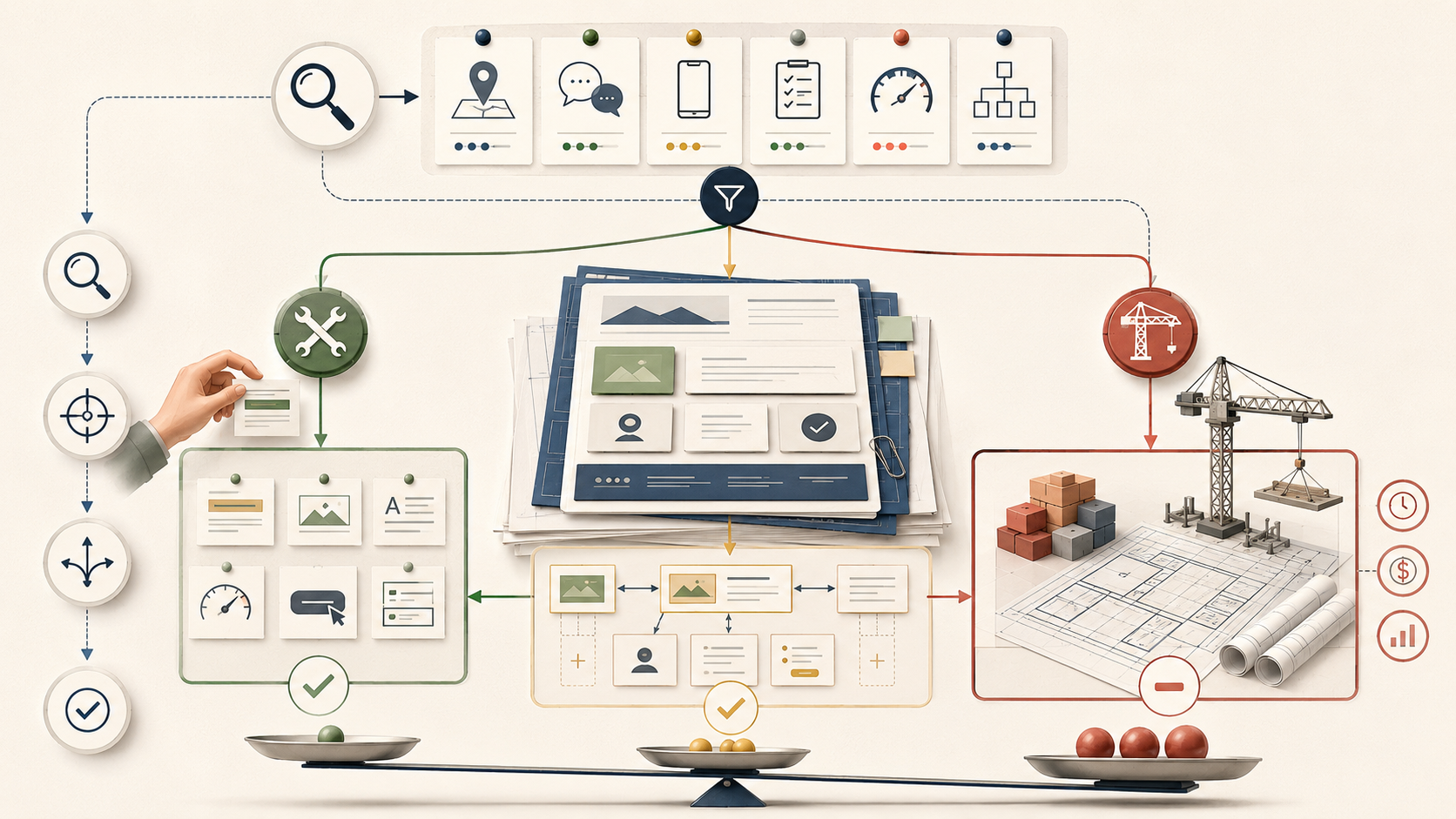
Before investing thousands in coaching and advertising, I should have tested the fundamentals.
1. A narrower customer
“People who wear activewear” is not a useful market definition.
The store needed a more specific audience with a recognisable need, taste, price point or use case.
2. A stronger reason to buy
A modern theme and attractive product images are not enough.
Why should somebody buy from this store rather than from a familiar sports brand or large marketplace?
3. One product with a realistic chance
A broad catalogue can hide the fact that no product has been chosen to lead the offer.
One focused product test would have provided more useful information than redesigning several collections.
4. Real margins
Advertising can only work when enough money remains after product cost, payment fees, shipping, discounts, returns and support.
Revenue alone would not have paid for the coaching.
5. A small proof of demand
The store needed evidence that someone was willing to buy.
Not likes.
Not clicks.
Not compliments about the design.
A purchase.
6. A defined maximum loss
Before testing, I should have decided how much I could lose while learning.
Without a limit, every disappointing result can become an argument for spending more.
Questions beginners should ask before hiring an ecommerce agency
An agency proposal should become clearer when questioned.
If it becomes more confusing, that is useful information too.
Has the store proved that anyone wants the offer?
A store with no sales may still have potential.
It has not yet proved it.
What exactly will the agency change?
Not “scale”, “optimise” or “build a winning strategy”.
What pages, campaigns, products, messages, systems or decisions will change?
What assumptions must be true for the plan to work?
Does the plan depend on strong margins, repeat purchases, a certain conversion rate or a large testing budget?
How much additional gross profit is needed to recover the fee?
Not revenue.
Profit after the real costs of selling.
What happens when sales do not appear?
Does the agency adapt the plan? Does the programme continue unchanged? Who carries the financial risk?
Could a smaller test answer the most important question first?
A €500 test that reveals the offer is weak may be more valuable than a €6,000 programme built on the assumption that the offer only needs better marketing.
Is the recommendation based on the business—or on the service the agency sells?
A coaching company will naturally see coaching opportunities.
An advertising agency will naturally see advertising opportunities.
The owner still needs an independent diagnosis.
That is also the standard Vayluna wants to apply through its growing range of services: explain the real problem in clear language, recommend a proportionate next step and do not assume that the largest available project is automatically the right one.
What ActivewearDiva taught me
ActivewearDiva is now parked.
It was not a total waste.
It taught me that buying a website and buying a business are not the same thing.
A theme can be polished.
A catalogue can be full.
A market can be large.
None of that proves that a specific store has earned customer demand.
It also taught me how vulnerable a beginner becomes after a period without sales.
You start wanting the problem to be technical.
You want the right app, agency or advertising structure to unlock the store.
That is more comforting than admitting the offer itself may need to change.
The most valuable ecommerce advice I could have received at that moment was not how to spend €6,000 more effectively.
It was that ActivewearDiva had not yet earned the right to ask for that investment.
A beautiful store is not automatically a business.
And when a store has produced zero revenue, the first task is not to double it.
It is to prove that there is something worth doubling.