When people hear that I am building InstantTraveling, one question almost inevitably follows.
Why build another travel website?
It is a fair question.
The internet already contains more travel information than anyone could consume in a lifetime. Every destination has thousands of articles, countless videos, millions of reviews and an endless stream of recommendations on social media. Artificial intelligence can now generate a complete destination guide before someone has finished making coffee.
At first glance, another travel platform seems unnecessary.
For a long time, I agreed.
The world did not need another website publishing the same destinations, the same itineraries and the same supposedly hidden places that everyone else was already recommending.
Then I realised that the problem was not a lack of travel information.
The internet had become extraordinarily good at helping us find information, but remained surprisingly poor at helping us make decisions.
That distinction became one of the foundations of InstantTraveling.
An unlikely inspiration
The original inspiration did not come from another travel startup.
It did not come from Google Maps, Tripadvisor, TikTok or an AI travel planner.
It came from a book.
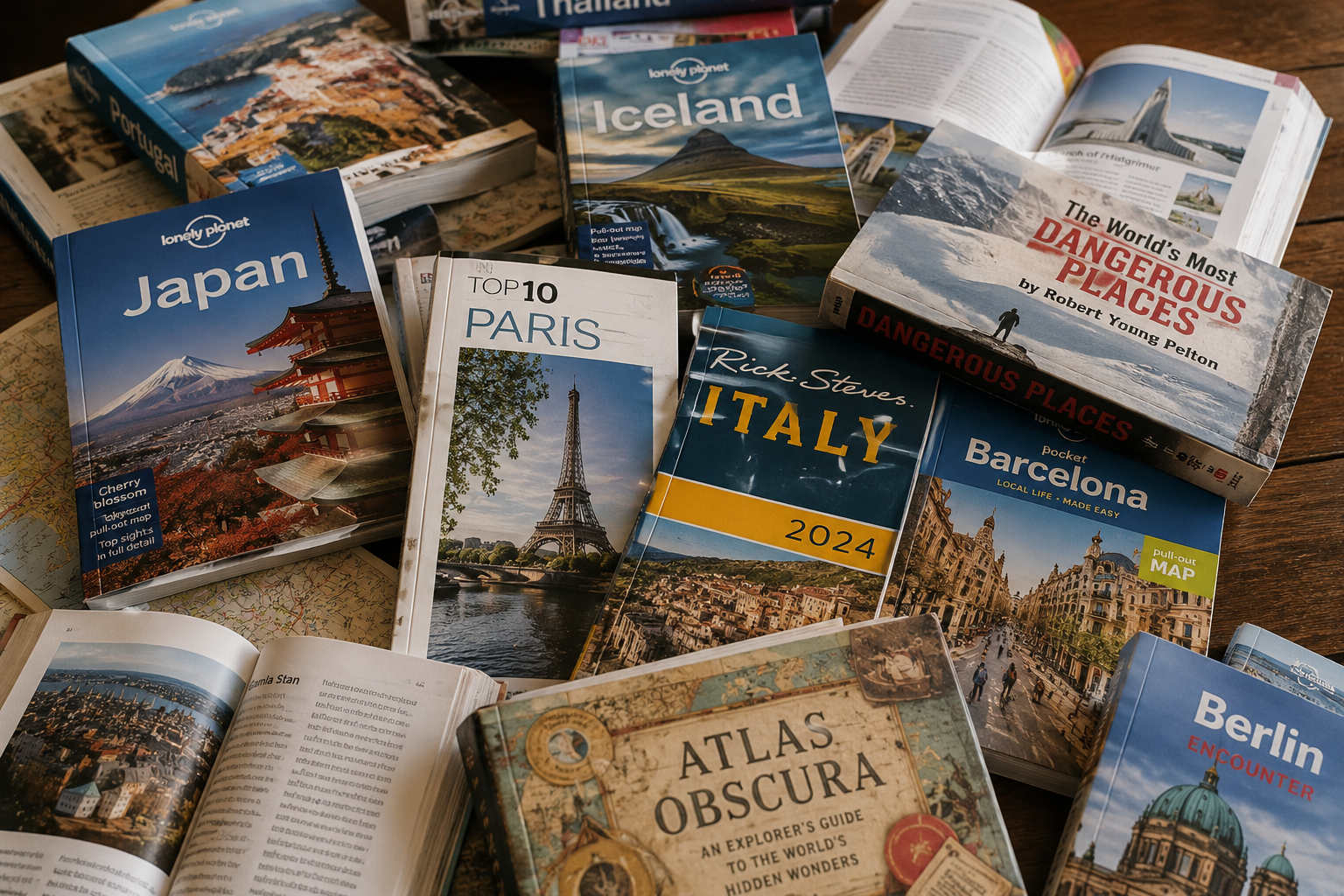
Years ago, I discovered Fielding's The World's Most Dangerous Places, written by Robert Young Pelton.
On the surface, it could hardly be further removed from the kind of platform InstantTraveling is becoming. It was not a guide to city breaks, boutique hotels or charming cafés. It dealt with conflict zones, political instability and places most travellers would deliberately avoid.
That subject matter was not what stayed with me.
The way the information was presented did.
Pelton was not trying to convince every reader to visit every place. He did not smooth away danger, contradiction or discomfort to make destinations more marketable. The writing was informative, practical and immersive, but it also had a distinct personality.
It felt different because it was different.
The book demonstrated that useful travel information did not need to be sterile. A guide could be factual without becoming dull, opinionated without becoming careless and entertaining without sacrificing substance.
InstantTraveling is not an attempt to imitate its subject matter or tone. We are not building a guide to war zones.
The inspiration lies in a broader principle:
Travel information does not have to sound like every other travel guide.
It can respect the reader enough to acknowledge complexity. It can explain why something may be worth doing, while also explaining why it may not suit everyone. It can inform rather than merely promote.
That idea stayed with me long before InstantTraveling had a name.
The internet won the information battle
Never before has so much travel information been so accessible.
A traveller planning a weekend in Lisbon can move between Google Maps, YouTube, Reddit, hotel platforms, restaurant apps, official tourism websites, independent blogs and thousands of customer reviews.
Someone planning a road trip through Scotland can find hundreds of complete itineraries.
Someone looking for cafés in Tokyo can produce a shortlist without ever opening a traditional guidebook.
Someone who does not want to perform that research manually can ask an AI assistant to summarise it.
Planning should therefore have become effortless.
Instead, it often feels exhausting.
We open ten tabs to answer one question. We compare articles that contain many of the same recommendations. We read contradictory reviews from people with completely different expectations. We switch from a map to a blog, then to Reddit, then back to a booking platform.
The volume of available information increased dramatically.
Confidence did not increase at the same rate.
The internet solved access.
It did not fully solve selection.
Information inflation
The travel internet does not suffer from an information shortage.
It suffers from information inflation.
Search for almost any popular destination and the formats will look familiar:
- 10 things you must do
- 25 hidden gems
- The ultimate guide
- Everything you need to know
- The perfect weekend itinerary
- Places the locals do not want you to know about
Many of these articles are useful. Some involve genuine reporting, local knowledge and excellent writing. The problem is not that every list is bad.
The problem appears at scale.
Articles begin drawing from the same pools of information. The same viewpoints, museums, streets, restaurants and cafés return in slightly different orders. One publisher calls a place essential. Another calls it secret. A third adds it to a list of local favourites.
Eventually, every hidden gem appears on dozens of websites.
The place itself may still be worthwhile. It is simply no longer hidden.
When everything is described as authentic, unique, unmissable or undiscovered, those words lose their ability to help anyone choose.
The destinations did not become identical.
The language surrounding them did.
Existing platforms are not the enemy
It would be easy to frame this as a complaint about large travel companies.
That would also be unfair.
Many existing platforms are excellent at the jobs they were designed to perform. InstantTraveling exists because we want to address a different part of the journey, not because every established guide has somehow failed.
Google Maps helps us locate
Google Maps may be one of the most useful travel tools ever created.
It can locate a restaurant, estimate the journey, display opening hours, show recent photographs and provide hundreds of reviews. For navigation and local discovery, it is difficult to replace.
What a map cannot always answer is the more personal question:
Is this worth my limited time?
Distance is not value. Popularity is not suitability. A high rating does not guarantee that a place matches the kind of experience a particular traveller wants.
Maps help us navigate geography.
They do not always resolve judgement.
Tripadvisor helps us compare
Tripadvisor has assembled an extraordinary volume of traveller reviews.
Once someone has identified several possible hotels, restaurants or attractions, that database can be extremely valuable. Recent reviews may reveal recurring problems, changes in quality or practical details that the official page does not mention.
But comparison usually begins after discovery.
Before comparing five restaurants, someone still has to decide which five deserve consideration. That frequently means consulting several other sources first.
Tripadvisor is powerful at helping travellers evaluate candidates. It cannot always decide which candidates belong on an individual traveller's list.
Lonely Planet provides breadth and authority
Few publishers have influenced independent travel as much as Lonely Planet.
Its guidebooks helped generations of travellers navigate unfamiliar countries with a level of confidence that would otherwise have been difficult to achieve. The company still works with destination experts and presents firsthand recommendations across an enormous range of places.
That depth remains valuable.
But a comprehensive guide and a specific decision are different products.
A traveller may not need another extensive overview of everything a city contains. At a particular moment, that person may simply need one reliable answer about where to spend the next three hours.
TheFork makes booking easier
TheFork solves a practical problem remarkably well: finding availability and reserving a restaurant.
That removes genuine friction.
But making a reservation is not the same as deciding where someone wants to eat. The platform becomes most useful after the traveller already has a reasonable sense of what they are looking for.
Discovery, judgement and transaction overlap, but they are not identical.
Official tourism websites promote
Official organisations such as Visit Brussels and Visit Flanders perform an essential role.
They present cultural heritage, events, attractions and local businesses. They provide official information and help destinations communicate with visitors.
Their purpose naturally includes promotion.
That means they are generally designed to show why a destination deserves attention. They are not necessarily intended to tell a particular traveller that an acclaimed attraction is unlikely to suit them.
That is not a weakness. It is a consequence of their mission.
Atlas Obscura and Rick Steves show that voice still matters
Some publishers already demonstrate that travel guidance can have a distinct editorial identity.
Atlas Obscura deliberately focuses on unusual places and overlooked stories rather than trying to catalogue every conventional attraction.
Rick Steves built a recognisable approach around practical European travel, independent decision-making and clear personal recommendations.
Neither is identical to what we are building. Both nevertheless show that a guide becomes more useful when readers understand its perspective.
A point of view is not automatically bias that must be removed.
When it is transparent and supported by evidence, it can become part of the value.
The questions that actually shape a trip
Traditional travel content often answers questions that are interesting.
InstantTraveling should also answer questions that are useful.
A square may have been constructed in the fifteenth century. That history can matter.
But a traveller may first need to know that the square becomes almost impassable when several tour groups arrive at midday.
A museum may describe itself as family-friendly.
A parent may need to know that much of the building is difficult to navigate with a pushchair.
A restaurant may be labelled a local favourite.
A visitor may be better served by learning that it attracts mostly local customers at lunch and a predominantly tourist crowd in the evening.
A beach may still be called hidden long after social media turned its access road into a traffic jam every summer weekend.
A viewpoint may be beautiful but not worth a two-hour queue.
A neighbourhood may be fascinating during the day and uncomfortable for an inexperienced visitor late at night.
These details are not always glamorous.
They are often exactly what determines whether a recommendation is useful.
Instead of saying:
Beautiful historic square.
A guide might say:
Visit before 9:00 if you want to experience it without large tour groups.
Instead of saying:
Ideal for families.
It might say:
Children may enjoy the exhibits, but the steep stairs and narrow passages make a pushchair difficult.
Instead of saying:
Authentic local restaurant.
It might say:
Mostly local customers at lunch; much busier and more visitor-oriented after 19:00.
The second version does not necessarily contain more information.
It contains more decision value.
Honesty is more useful than universal enthusiasm
Travel publishing often rewards excitement.
Every place becomes unforgettable. Every neighbourhood becomes vibrant. Every café becomes charming. Every restaurant becomes a hidden gem.
Reality is more nuanced.
Sometimes the famous attraction fully deserves its reputation.
Sometimes the supposedly overrated place becomes the highlight of a trip.
Sometimes the quiet side street creates a stronger memory than the landmark around which the entire day was planned.
Sometimes a highly rated restaurant serves excellent food but is not worth waiting ninety minutes for.
A useful guide should be able to hold more than one of those truths at the same time.
It should not criticise places merely to sound bold. Being different for its own sake is just another formula.
But it should be willing to say:
- this is excellent, but not for everyone;
- this is popular for a good reason;
- this is beautiful, but the timing matters;
- this is marketed as undiscovered, but has not been quiet for years;
- this is imperfect and still worth visiting;
- this is famous and may genuinely be worth skipping.
That kind of honesty does not diminish a destination.
It helps align expectations with reality.
AI could make the problem worse
Artificial intelligence will transform travel publishing.
It can already assist with research, translation, route planning, classification and the comparison of large volumes of information. It can help detect contradictions, identify outdated details and adapt guidance to different travellers.
Those capabilities are valuable.
They also introduce an obvious risk.
If producing a travel article becomes nearly free, the internet will not contain less generic travel content.
It will contain exponentially more.
More destination guides.
More rewritten lists.
More summaries of summaries.
More articles assembled from information that already appeared elsewhere.
The obvious use of AI is to publish more quickly.
The more interesting use is to decide what should not be published at all.
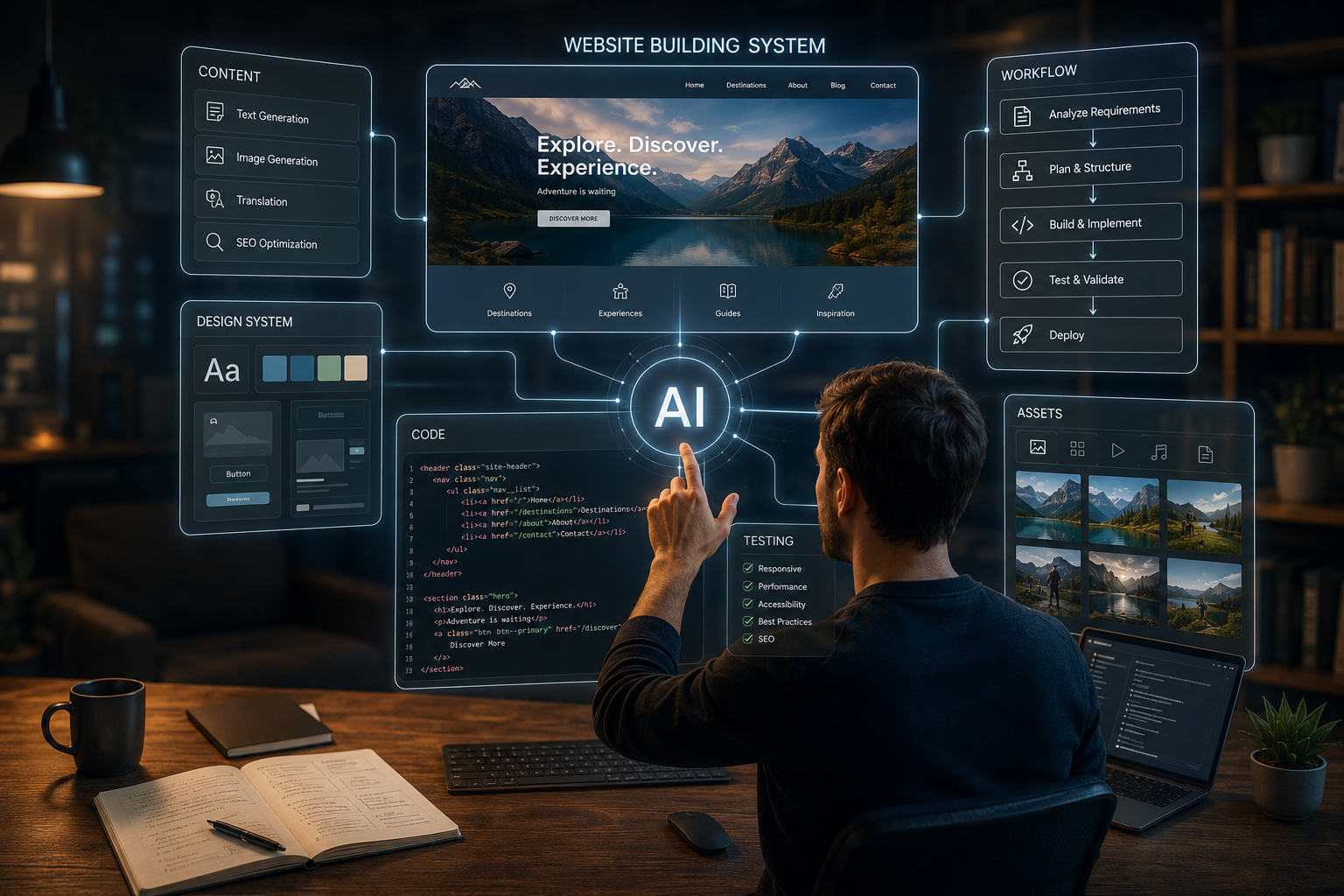
We explored the same broader principle in AI Can Build Websites Now. But It Still Needs Someone to Lead.. Technology becomes useful when it works inside a deliberate system. Without direction, it simply produces the wrong thing faster.
For InstantTraveling, AI should not exist to flood the site with destination pages.
It should help us reduce noise, maintain information, compare sources and identify the details that matter to an actual decision.
The goal is not automated abundance.
It is assisted judgement.
What InstantTraveling is trying to become
InstantTraveling is not intended to replace Google Maps, Tripadvisor, Lonely Planet, Atlas Obscura, TheFork or official tourism organisations.
Trying to reproduce all of them would create an inferior version of services that already exist.
The project begins with a different question:
How can travel information reduce uncertainty instead of merely increasing volume?
That means building around a few principles.
Fewer generic recommendations
Publishing hundreds of interchangeable articles has little value simply because the technology makes it possible.
Every guide should have a reason to exist.
More practical context
A recommendation becomes more useful when it explains the circumstances in which it works.
Timing, accessibility, crowds, atmosphere, transport and realistic expectations often matter more than another adjective.
A visible editorial perspective
No travel guide is entirely neutral.
Choosing what to include is already a judgement.
Rather than hiding that judgement, InstantTraveling should make its reasoning understandable and support it with evidence.
Technology in service of the traveller
AI, structured data and automated workflows should make guidance more current and more relevant.
They should not become an excuse to generate content without experience, verification or purpose.
Information that supports a decision
The final test is not how much a page contains.
It is whether the reader understands what to do next.
InstantTraveling is currently being rebuilt
At the time of writing, InstantTraveling remains under active redevelopment.
That is worth stating clearly because this article can be published before every part of the platform reflects the philosophy described here.
Some sections are live. Others are being restructured or rebuilt. The editorial system, destination coverage and technical foundation will continue to evolve.
We could postpone this article until the platform looked finished.
That would create a cleaner story, but not a more honest one.
InstantTraveling is being rebuilt precisely because publishing more pages on top of an unclear structure would solve the wrong problem. We would rather develop the editorial principles and infrastructure first than rush out hundreds of articles that add little to what is already available elsewhere.
The unfinished state is not presented as a virtue by itself.
A project does not become valuable merely because it is public or incomplete.
It does, however, provide context. Readers who visit today are seeing a platform in transition rather than a finished claim about the future of travel publishing.
The same idea, from the travel side
This article explains the thinking behind InstantTraveling from Vayluna's perspective: why we are building it, what influenced the project and which problem we believe still deserves attention.
InstantTraveling also carries its own version of this editorial position, written directly for its readers:
Read We Don't Need More Travel Guides. We Need Better Ones. on InstantTraveling
The two articles deliberately overlap in philosophy but serve different roles.
Vayluna documents the reasoning and the process behind the venture.
InstantTraveling must prove that philosophy through the guidance it ultimately gives travellers.
We do not need more travel content
The internet does not need another website simply because another website can be built.
It does not need another thousand articles repeating recommendations that already appear everywhere else.
Travellers already have access to maps, reviews, guidebooks, reservation systems, videos, social platforms and AI assistants.
What they often still lack is clarity.
InstantTraveling exists because somewhere along the way, travel publishing became increasingly focused on producing more while travellers still needed help deciding better.
The ambition is not to become the largest travel guide.
It is to become one that respects the reader's time.
One that is willing to be specific.
One that distinguishes useful context from decorative information.
One that understands that honesty can be more inspiring than hype.
The World's Most Dangerous Places showed me years ago that a travel guide could be informative, immersive and unmistakably different.
InstantTraveling will be something entirely different from that book.
But the lesson remains.
A guide does not become valuable because it contains everything.
It becomes valuable when it helps someone understand what actually matters.